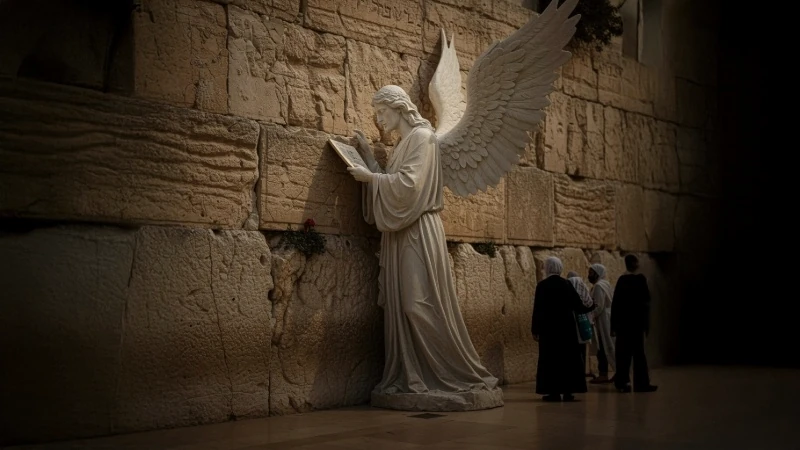
Scripture calls some of God’s people to be watchmen on the walls—awake, alert, and honest about what they see for the sake of Jerusalem and the world. That is the calling of a modern-day Esther, too.
The Bible gives a warning that feels made for this moment:
“But exhort one another daily, while it is called Today; lest any of you be hardened through the deceitfulness of sin.”— Hebrews 3:13
Sin does not only tempt us to do the wrong thing.
It first tempts us to believe the wrong story.
We are watching that happen in real time—in films, in politics, and even in how the world talks about terror.
When a “Beautiful” Story Is Built on a Lie
The film Eleanor the Great is one of those cultural moments that pulls at the heart and ties your stomach in knots.
On the one hand, it tries to honor Jewish grief and memory. It leans into the pain of the Shoah. It gives viewers a window into the loneliness and trauma of a woman who wants her life to mean something. It even involves real Holocaust survivors on screen.
On the other hand, the very premise of the story is a lie: a woman who did not survive the Holocaust tells people that she did. She takes on a history that is not hers. Her deception is driven by grief and longing, but it is still a deception.
That is not a small detail.
Holocaust memory is holy ground.
Scripture never treats falsehood as a harmless shortcut to love:
“These are the things you are to do: Speak the truth to each other, and render true and sound judgment in your courts.”— Zechariah 8:16
“Therefore each of you must put off falsehood and speak truthfully to your neighbor…”— Ephesians 4:25
When we tell a story about the Shoah where a lie “heals” more than the truth, we have to ask hard questions:
Are we training viewers to think that empathy is more important than honesty?
Are we quietly teaching that the line between survivor and non-survivor is flexible, if it makes for a moving story?
Are we, in the name of compassion, making it easier to play games with Jewish memory?
The deceitfulness of sin does not always look like open hatred. Sometimes it looks like a “beautiful” fiction that slowly blurs what is real.
When Terrorists Are Rebranded as “Mandela”
Now look at another story.
More than 200 celebrities—from Paul Simon and Sting to Benedict Cumberbatch, Susan Sarandon, and Margaret Atwood—have joined a campaign calling on Israel to release Marwan Barghouti.
They are not just asking for mercy. They are comparing him to Nelson Mandela.
Barghouti is serving five life sentences plus forty years for helping plan attacks that murdered Israeli civilians during the Second Intifada. Israeli officials identify him as a leader of the al-Aqsa Martyrs Brigade—a terrorist group behind suicide bombings and shootings.
Yet the campaign calls him the “Palestinian Mandela.” Supporters speak as if he “embodies the possibility of peace.” They urge the UN and governments to pressure Israel to set him free.
This is not compassion grounded in truth.
This is compassion built on a lie.
The sermon on Hebrews 3:13 puts it starkly:
One sign of a hardened heart is that truth does not move us as it once did.
Another is that we can jest about sacred things—or applaud others when they do.
Over time, we become spiritually blind.
When the murder of Israelis is washed with words like “resistance,” “epic of heroism,” and “national icon,” something terrible is happening inside the hearts that say such things—and inside the hearts that cheer them on.
“Woe to those who call evil good and good evil…”— Isaiah 5:20
“Peace” Without Repentance
As Christians, we can recognize that there may be ceasefires, political agreements, or quieter moments in history—but Scripture is clear: that is not the same as true peace. Real shalom is rooted in truth, justice, and repentance, not in ignoring sin or rebranding violence as “resistance.” The prophets warned against those who cry “Peace, peace” when there is no peace (Jeremiah 6:14), and God Himself says, “There is no peace… for the wicked” (Isaiah 48:22). Whenever leaders use the language of peace while honoring or rewarding terror, we are looking at a counterfeit.
A third story comes from Europe.
French President Emmanuel Macron has recognized a Palestinian state and spoken warmly of Mahmoud Abbas as a leader who condemns terrorism and wants demilitarization.
Meanwhile, the Palestinian Authority’s own media keeps doing what it has done for years:
Airing songs that praise guns, “Martyrdom,” and bloodshed.
Broadcasting tributes that glorify terrorist prisoners as “national icons,” “leaders,” and “knights.”
Holding rallies where figures like Marwan Barghouti are hailed as symbols of pride and glory.
In other words: the public messaging has not changed. The words “peace” and “statehood” are spoken on one stage, while the words “weapon,” “blood,” and “Martyr” echo on another.
This, too, is the deceitfulness of sin. It dresses itself in the language of peace, while feeding the next generation on songs of war.
The Lies that Harden Us
What do these three stories have in common?
A film that asks us to feel for a woman whose whole power comes from a lie about the Holocaust.
A celebrity campaign that asks us to pity a convicted terrorist as if he were Mandela.
A political move that calls a leadership “peace-seeking” while that same leadership keeps praising killers as heroes.
Each one asks us to feel deeply—but not necessarily to see clearly.
If we are not careful, our hearts can be moved by the wrong things. We can weep at the wrong moments and cheer for the wrong people. We can become, in the language of Hebrews, “hardened through the deceitfulness of sin.”
The first evil of a hardened heart is a corrupt life.
Then comes spiritual blindness.
Then comes despair.
Finally, if nothing changes, judgment.
“But because of your stubbornness and your unrepentant heart, you are storing up wrath against yourself…”— Romans 2:5
This is not just about “them”—celebrities, politicians, or foreign leaders.
It is about us.
A Call to Modern-Day Esthers
As Christian Women For Israel, we are not called to control Hollywood or Paris. But we are called to guard our own hearts and to lead others in truth.
So we have to ask—not because we are uninformed, but because we are entrusted with influence:
How am I helping my family, church, and friends tell the difference between true courage and clever propaganda?
When celebrities or politicians praise convicted terrorists as symbols of “peace,” how do I gently but clearly bring facts and Scripture into the conversation?
Where am I tempted to soften my words for the sake of politeness, instead of speaking plainly about Jewish suffering and the reality of terror?
How can I use my platforms—at home, online, and in my church—to keep Holocaust memory and Israel’s story rooted in truth rather than sentiment or spin?
If I’m honest, am I more shaped by headlines and hashtags—or by the Word of God and the heart of the Lord?
In these evil days, am I just absorbing whatever I hear, or am I slowing down to ask, “Lord, what is true? What do You say about this?”
Esther’s world was full of lies, too—half-truths at court, plots whispered in the palace. She did not have the luxury of living in denial. She had to see clearly, speak plainly, and stake her life on God’s truth.
“…who knows but that you have come to your royal position for such a time as this?”— Esther 4:14
The same God now calls you to be a woman who:
Loves Jewish people enough to reject narratives that glorify their killers.
Honors Holocaust memory enough to resist “beautiful” lies about it.
Prays for real peace—but refuses to pretend there is repentance where there is none.
Today’s Prayer
Lord Jesus,
You are the Truth. Expose the lies that are hardening hearts in our culture—lies about Israel, about terror, and about the value of Jewish life. Protect me from the deceitfulness of sin. Don’t let me call evil good or build my compassion on untruth.
Give me the courage of a modern-day Esther—to love truth, to bless Your people Israel, and to stand against the glorifying of terror in whatever form it takes. Keep my heart soft toward You and clear-eyed about the stories I’m being told.
In Your name I pray, Amen.

Stand with Israel as a Modern-Day Esther
When you give to Christian Women For Israel, you help comfort God’s people, push back rising antisemitism, and raise up modern-day Esthers who pray, teach, and act “for such a time as this.”
Your generosity today strengthens this work in Israel and around the world.
Stand with Israel – Donate Now

